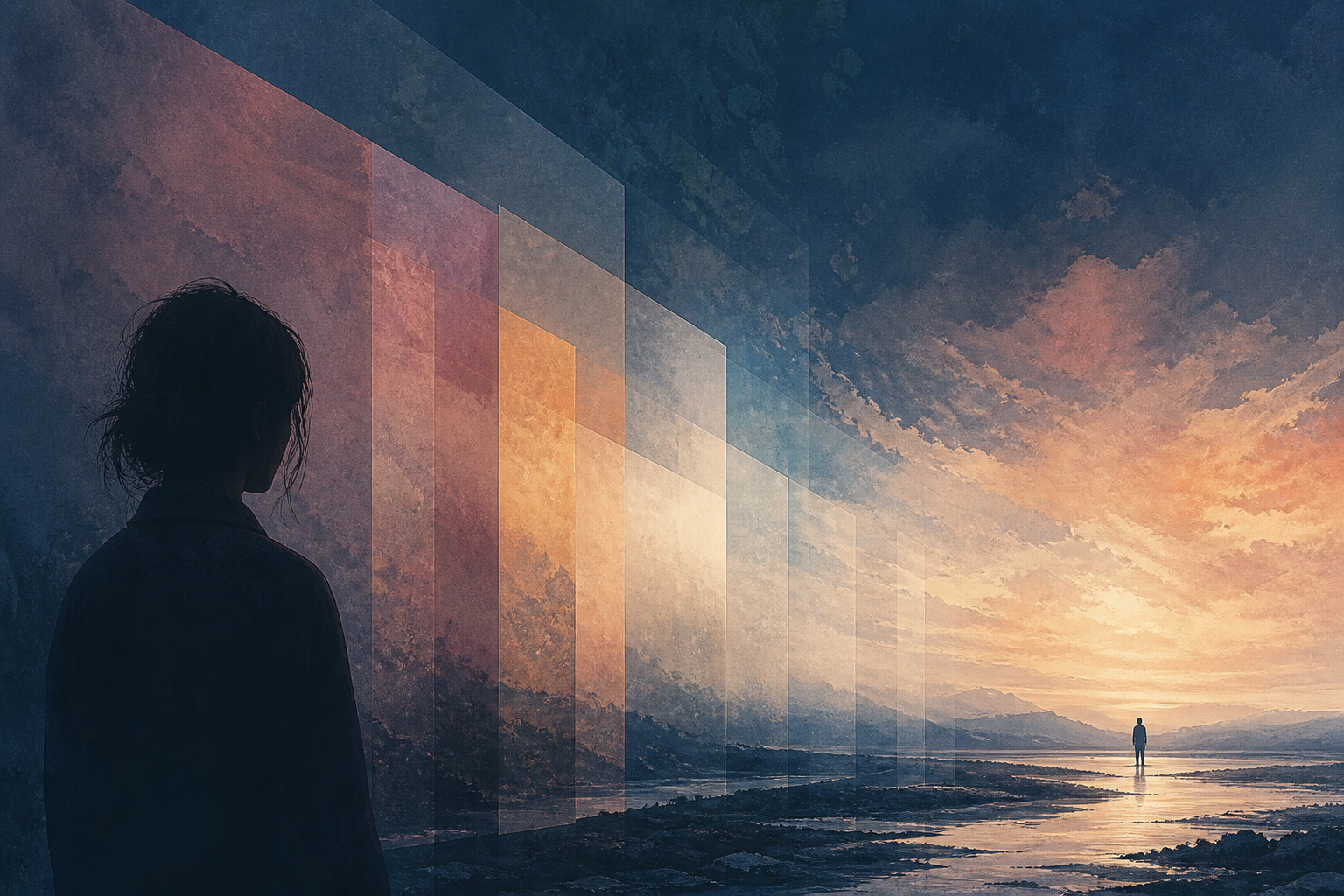
Every scene has an emotional distance. The audience may study a trembling hand, read a face, observe a relationship, or confront the scale of a world. Shot size determines which of those experiences dominates.
Moving closer does not automatically create more emotion. A close-up can produce intimacy, but it can also feel invasive, clinical, or withholding because the surrounding context disappears. A wide shot can feel detached, yet it may express loneliness or freedom more powerfully than a face filling the frame.
Ask What Owns the Moment
Choose distance by deciding what carries the scene’s meaning:
- A detail calls for an extreme close-up.
- An expression often calls for a close-up.
- A decision expressed through body language benefits from a medium shot.
- A relationship or physical action needs enough room for multiple bodies.
- A character’s place in the world often requires a wide or extreme wide shot.
This shifts the question from “Which shot looks cinematic?” to “What must the audience be able to read?”
Extreme Close-Up: The Detail Becomes the Event
An extreme close-up isolates a small feature: an eye, a finger on a switch, a crack spreading through glass. It tells the audience that this detail deserves unusual attention.
Because context is removed, the shot can create anticipation. The viewer sees that something matters before understanding why. It is most effective when the detail changes the interpretation of the larger scene.
Close-Up: Reading and Withholding Emotion
A close-up gives the face or object visual priority. It can invite empathy by making subtle expression legible, but it can also refuse access: a still face under pressure may make the audience search for meaning that the character will not reveal.
Do not treat every emotional beat as a reason to move closer. If the performance and context already communicate the feeling, distance may preserve ambiguity. Save the close-up for the moment when noticing a reaction changes the story.
Medium Shot: Decision in the Body
A medium shot balances expression with gesture. Hands, posture, and the relationship to nearby objects remain visible. This makes it especially useful for dialogue, work, confrontation, and decisions expressed through action rather than facial reaction alone.
Medium shots often provide the connective tissue of a sequence. They orient the audience after a close detail and prepare movement toward a wider consequence.
Wide Shot: Character in Context
A wide shot allows environment to compete with or dominate the figure. Empty space can express isolation. A crowded space can create pressure. A horizon can suggest possibility, while an enclosing structure can make escape feel difficult.
The environment should not be treated as background decoration. In a narrative wide shot, place, scale, weather, light, and paths through the frame all contribute to the character’s situation.
Distance Changes Over Time
A sequence can move inward:
- Wide shot: a woman reaches an abandoned house.
- Medium shot: she hesitates at the door.
- Close-up: she recognizes a symbol carved into the wood.
- Extreme close-up: her thumb traces a matching scar on her hand.
The progression narrows from world to decision to evidence. Reversing the order would create a different experience: mystery first, context later.
Moving outward can be equally expressive. After an intimate confession, cutting from a close-up to an extreme wide view may reveal the physical or social distance that remains between two characters.
Prompting Shot Distance for AI Images
State what should fill the frame and what context must remain visible:
Extreme close-up of a weathered hand touching a carved symbol on a wooden door, the symbol and fingertips fill the frame, very shallow surrounding context, quiet recognition rather than horror.
Extreme wide shot of a solitary woman before an abandoned house at the forest edge, the figure occupies less than ten percent of the frame, the landscape dominates, overcast light, isolation and reluctant return.
Percentages are not guaranteed controls, but relational descriptions—small figure, dominant environment, face fills the frame—help clarify visual priority. If the model drifts, change one instruction at a time.
Build an Emotional Distance Map
Before generating a sequence, make a small table with four columns: story beat, information revealed, emotional distance, and shot size. Repeated close-ups become visible immediately, as do moments where the setting disappears for too long.
Shot distance is a form of narrative editing before the edit exists. It determines whether the audience feels close enough to read, far enough to judge, or suspended between a person and the world around them.