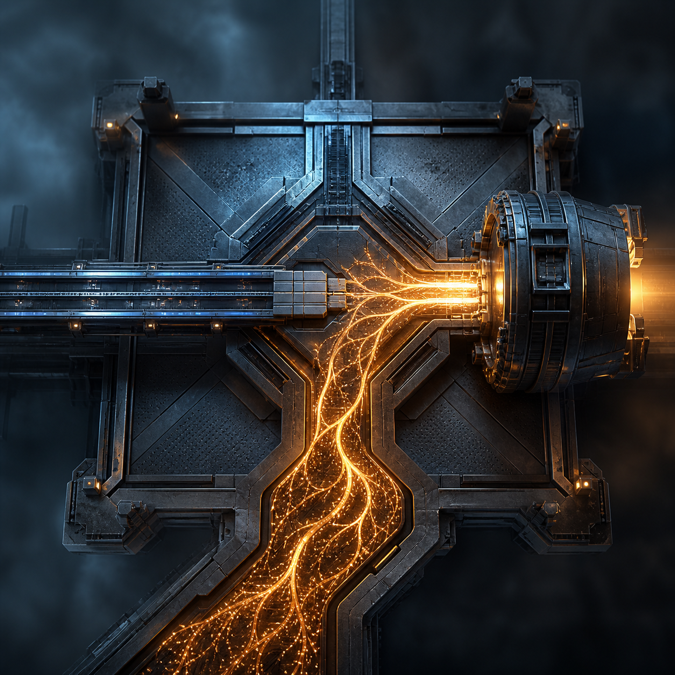
How Graphs Reduce the Need for AI AgentsExplicit graph relationships eliminate candidate choices and constrain valid routes. As the decision space shrinks, workflows can replace more autonomous planning.
Does This Task Need an AI Agent? Two Decisions, Not OneChoose between rules, LLM workflows and agents, then separately decide which actions the system may execute using evidence, permissions and outcome checks.
How Much Uncertainty Can an AI Agent Act On?Define the boundary for autonomous action: meaningful falsification or a validated dynamic heuristic that detects failure before unacceptable consequences.
The Same Task, Different Autonomy: Research, Draft, PublishA UniMatrixZ target pattern showing bounded research, reviewed drafts and controlled publication, with explicit acceptance gates and verified outcomes.
Cross-Domain Constraint Collapse: When AI Composition Loses the PlotThe hard part is not always the number of requirements. It is preserving the relationships between heterogeneous requirements through a multi-step act of composition.
AI Agent Architecture: Models, Memory, Tools, State and ControlLearn the components of a production AI agent and where reasoning, memory, state, tools and approval should live.
AI Coordinator Architecture: Preserve Process SovereigntyThe coordinator owns the run lifecycle and accepted transitions, allowing organizations to use probabilistic models without surrendering process control.
From AMR to Execution Graphs for Agentic WorkflowsAMR captures who did what to whom; execution graphs define state, permitted transitions, tools and validation for agentic workflows.
Agentic Workflows vs. Production PipelinesChoose between deterministic pipelines, coded AI workflows and dynamic agents with a practical production architecture framework.