Generative AI is changing how we write, create images, organize knowledge, and interact with digital systems. But understanding this shift requires more than following new models and product releases. It requires experimentation, critical reflection, and a closer look at the ideas behind the technology.

This blog explores language models, generative art, prompt engineering, associative memory, and emerging AI workflows. It examines how these systems behave in practice, where their limitations become visible, and how they influence creative and intellectual work.

The articles also address the broader questions surrounding artificial intelligence: alignment with human goals, power and responsibility, copyright, regulation, and the increasingly complex relationship between people and machines.

Expect technical explorations, creative experiments, conceptual essays, and practical observations—written for readers who want to understand not only what generative AI can produce, but how it changes the way we think, create, and navigate information.

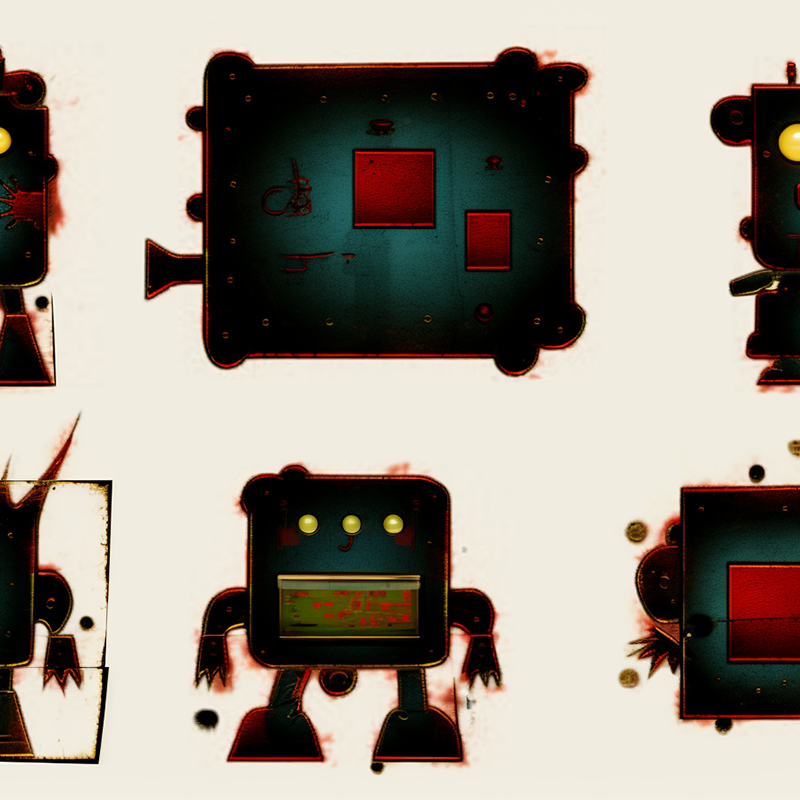
Analyzing Midjourney's Quality Improvements Through Blend Mode

Analyzing Midjourney's Quality Improvements Through Blend Mode

Midjourney's Blend feature merges 2-5 images, creating novel and unique visual ideas while preserving significant elements from each image. The Blend mode opens up possibilities for artists and designers with its various applications and simple workflow, setting it apart from other AI art tools. Midjourney v5's key quality improvements and the blend mode's potential for visual storytelling make it a valuable asset for artists, filmmakers, and designers.

Harness the Power of Generative AI for Unparalleled Content Production

Harness the Power of Generative AI for Unparalleled Content Production

Generative AI has revolutionized content creation, automating aspects of the creative process and producing human-like content with advanced natural language processing techniques. Its impact on SEO is significant, with generative AI assisting in keyword research, content optimization, and link-building efforts. By leveraging generative AI, businesses can outperform their competitors by producing high-quality, SEO-optimized content that adapts to changes in search engine algorithms.

How to Measure Entropy in Images with Python

How to Measure Entropy in Images with Python

This article explains how entropy measures an image's level of disorder or unpredictability and how it can be used in various practical applications such as image compression, segmentation, and quality assessment. The article provides step-by-step instructions on calculating entropy in photos using popular Python libraries such as NumPy, OpenCV, and SciPy. Through the use of entropy, it is possible to measure a picture's complexity and identify the most informative regions for further processing or analysis.

Using GPT-4 to deal with technical debt

Using GPT-4 to deal with technical debt

The blog post explores using GPT-4 or ChatGPT for solving technical debt challenges caused by undocumented data structures in legacy systems. Legacy system migrations can benefit significantly from LLM data analysis support, which enhances productivity. The post provides a Python code example for extracting and transforming data from non-standard formats and demonstrates GPT-4's capacity to recognize data patterns and generate code for data extraction tools.

The explosion of Generative AI and content production

The explosion of Generative AI and content production

Generative AI is revolutionizing various fields, including the arts, medicine and the automobile industry, thanks to its increasing capability to perform tasks that were once thought to require human intelligence. By automating content creation, generative AI can create an abundance of possibilities, with trillions of artwork, concept images and portraits being created automatically. However, to make the most of generative AI, it is essential to collect market data, develop an understanding of the market needs, and curate the abundance of content effectively.

Potential Graph AI Models for Generative AI

Potential Graph AI Models for Generative AI

Platforms like Midjourney, Dalle-2, Stable Diffusion, and ChatGPT have increased popularity of Generative AI, leading to increased interest in multi-headed and single-headed models, as well as graph models. Multi-modal graph models can handle graph-structured data that includes text, photos, videos, and audio. Graph neural network models can be single-headed or multi-headed, can perform tasks such as node classification and connection prediction, and can use convolutional networks, attention networks, and generative graph models.